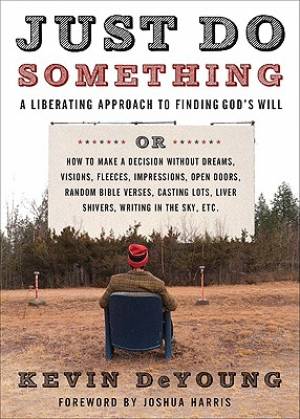
Continuing on my Kevin DeYoung kick, I recently read Why We Love the Church, his 2nd co-authored book with Ted Kluck in response to the Emergent church movement. The first of which was Why We're Not Emergent: By Two Guys Who Should Be. I have come to really respect DeYoung; he is a well thought out, well researched, Christ-centered writer. He is readable, respectful, and can make just about any topic interesting. Case in point: The two books I've read of his have been about decision making and church institutions.
But, enough about DeYoung, let's get to the book. This is much more a response to the faulty, unbiblical teaching of Emergent Christianity, than it is anything else. It delves into why books like Revolution by George Barna, Life After Church by Brian Sanders, and even a book called The Gospel According to Starbucks by Leonard Sweet are off-base and out of touch with God's true desire for Christian community and His bride, the Church. The essence of the Emergent movement is that the church (small c) is old, stale and irrelevant. Leaders even go as far as to say, Jesus' true desire for His Church (big c) is that they experience Him in real community--often small group, house church community or golf course community--outside of the church building. They would rather drink coffee at Starbucks and talk vaguely about God, than step foot in a institution with rules and regulations. To them, going to a church building is all bad and stepping out into a small community of Christian believers with no real structure is all good.
The two authors, DeYoung, the lead pastor of a church in East Lansing Michigan, and Kluck, a church laymen and sports writer, spend most of their time deconstructing the life-after-the-church mindset, warning of the dangers and presenting clear Biblical evidence for why Jesus does in fact like the "boring" parts of church--the institution, structure and hierarchy. They admit the church is not a perfect organism, but frankly, it is made up of all sinners and it will, therefore, have lots of room to grow into a more Christ-like thing. They contend the church does a lot of good and give many examples of this.
As for my opinion, I found this to be a worthwhile read. I didn't expect it to be such a drawn out critique on the Emergent movement, as I thought that was what their first book was about, but I did find it to be pertinent to a culture that looks for the easy way out (read: let's go hiking and talk about God's creation, rather than sit in a pew and sing the same old worship set). I think they boldly, yet tactfully, made their point. I leave you with one of their concluding thoughts that I liked:
"It's easy for the church to be blind to her failings. But it's also easy and borderline slanderous to constantly berate the church for all her failures as if she cared for no one, helped no one, and made no difference for anyone anywhere." (page 222)
"Church Doctrine" (3.5 of 5 STARS)
- ae